
Two hours wandering Dulwich College London completely reshaped my understanding of what it truly means to be elite.
An old library, an antique chest, a tiny lifeboat, a war memorial — what does four centuries of heritage truly feel like?
Hi everyone, I’m Taylor.On this trip to the UK, I paid an on-site visit to Dulwich College London.To be honest, I underestimated it before arriving. Having worked in junior international education for years, I’ve toured countless top British private schools and know Dulwich’s strengths well: outstanding academics, world-class drama programme, and a permanent spot among the UK’s elite private school tier. I assumed this visit would simply involve checking out facilities, asking about university placements and shooting content.
Yet after those two hours walking the campus, I realised how superficial my prior perceptions were.That day, I felt the full weight of the word “heritage” for the very first time. It is no empty slogan printed on brochures; it is the tangible gravity carried by that library, that chest, that lifeboat and that memorial, settling heavy in your heart.
In this article, I want to share everything I saw, heard and reflected on that day with you, unfiltered. It is quite lengthy, but I could not bring myself to cut a single paragraph — a 400-year-old school deserves to be told in full.
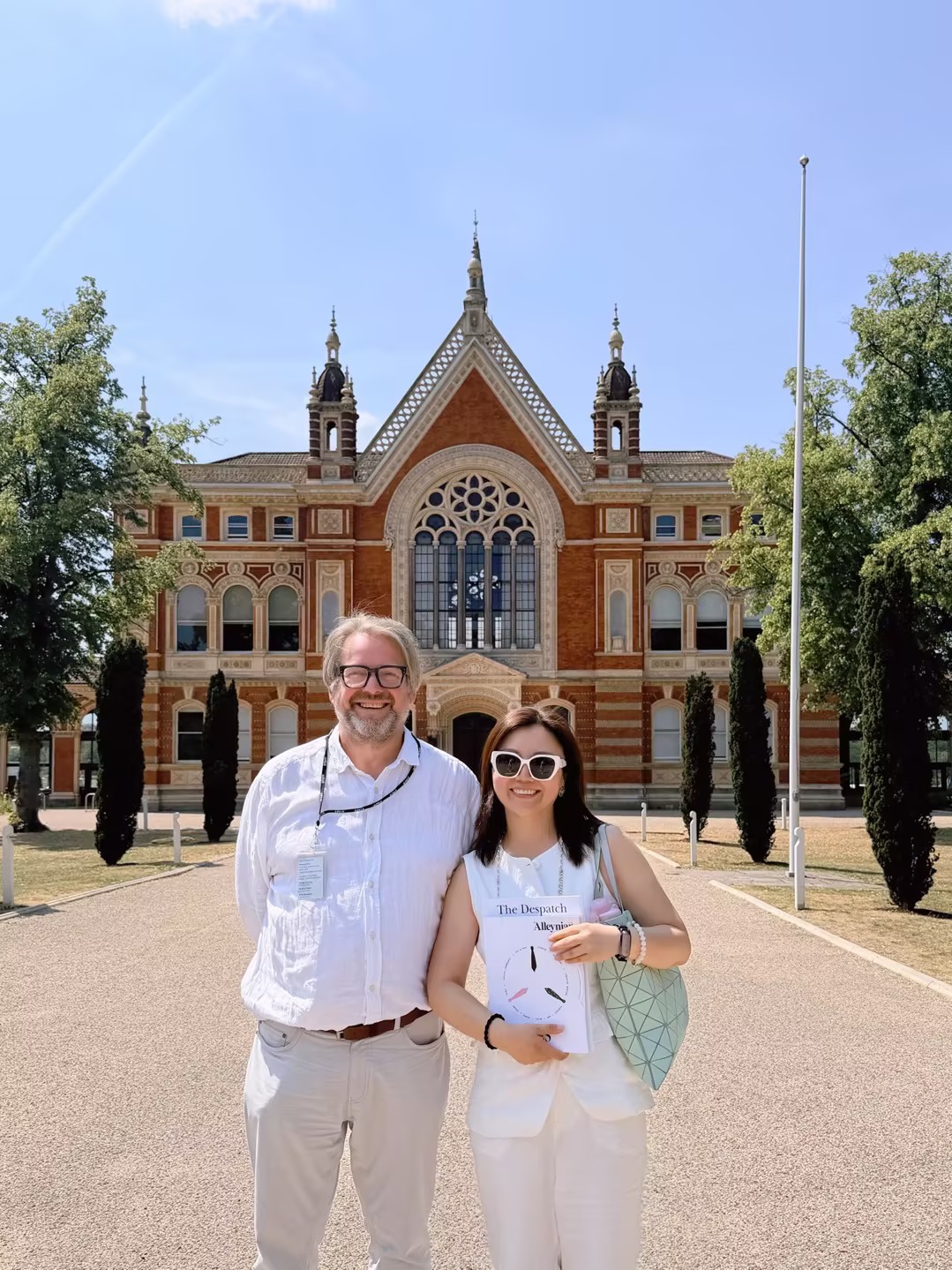
I. My tour guide: a drama department head with thirty-five years at Dulwich
Let me start with Peter, who led my campus tour.He served as Dulwich’s Head of Drama for thirty-five full years and has since stepped back to manage the school’s archive of historical artefacts. Imagine devoting the majority of your life to one school, refusing to leave even in retirement, instead guarding its centuries-old relics and untold stories.
As we walked, he wove tales nonstop: the origin of every room, the backstory behind every portrait hanging on the walls, the legacies of alumni long passed away. His eyes lit up as he spoke, brimming with unbridled, genuine pride for the college.
What struck me most, however, was his complete lack of the haughtiness common to teachers at elite schools. Humble, warm and endlessly patient, he made sure we did not miss a single detail. I later learned he has travelled extensively across China, teaching in Beijing, Shanghai and Dalian, alongside visiting Dulwich’s overseas campuses in Singapore and mainland China. Someone who has seen so much of the world carries no prejudice and exudes remarkable calm — and I believe this is no coincidence.
The more places you see and the farther you travel, the fewer prejudices you hold, and the greater your humility.A thought crossed my mind then: a school’s true depth lies not in its buildings or league table rankings, but in people like Peter. Students tend to grow into the likeness of their teachers.This quiet brilliance — passionate yet grounded humility — is heritage in its purest form.
II. A modest library encapsulating four hundred years of British history
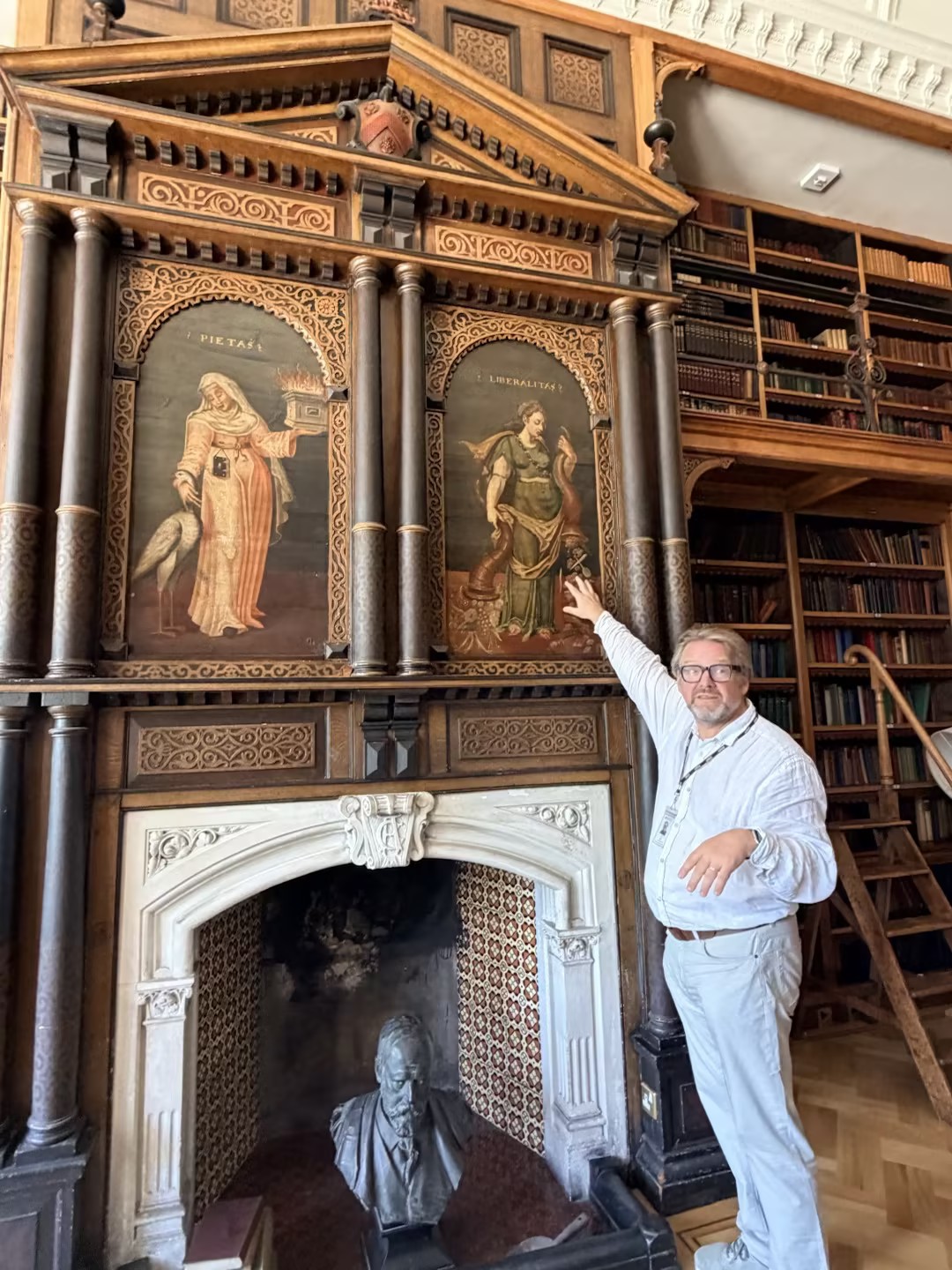
The first sight that left me speechless was a small, ancient space: the Masters’ Library.Compact in size, it commands instant silence upon entry. Floor-to-ceiling dark wooden bookshelves line every wall, crammed with centuries-old volumes; the ceiling boasts intricate carved mouldings; tall arched windows filter soft London greenery, casting warm light across timber and leather-bound spines. The entire room feels wrapped in the grainy filter of a vintage film.
It is so visually striking that the Harry Potter film crew once scouted it as a shooting location. Standing in its centre, I was overcome with an otherworldly, dreamlike sensation, as if stepping straight into a movie scene.
Yet what truly halted my steps were two paintings mounted above the fireplace.Peter explained them with great solemnity: they depict two allegorical goddesses — one embodying Pietas (Duty), the other Liberalitas (Generosity).
Ponder this for a moment: this school hung the virtues of Duty and Generosity as artworks inside its most sacred library, leaving them on display for four hundred years, for every generation of students to gaze upon day in and day out. No words are needed to spell out the character it aims to nurture in its pupils; the message hangs plainly on the walls.
These paintings themselves carry an extraordinary backstory. Four centuries ago, the school’s founder purchased them from a royal vessel belonging to Queen Elizabeth I, and the transaction record still survives in the college ledgers. Historians even speculate they originally adorned the legendary Golden Hind, Captain Drake’s flagship.
My heart sank further upon learning the library’s ceiling was fully reconstructed after the campus suffered bombing damage in World War Two.
This single modest library holds fragments of four hundred years of British history: relics from the Queen’s ship, centuries of antique books, a roof rebuilt amid wartime destruction, and the eternal twin values of Duty and Generosity.
This feels like a scene from fiction to visitors like me, yet for Dulwich students, it is an ordinary part of daily life.The divide between educational experiences often hides within these small, taken-for-granted everyday moments.
III. An antique chest and the tale of an actor who gave away his entire fortune
The second artefact that captivated me was an old iron-bound chest from the 17th century. Clad in iron corner plating and studded with iron nails, bulky and unadorned, it is preserved with immense care. Peter told us this was the college’s original treasure chest, housing its founding funds, manuscripts and land deeds when the school was first established. An inscription carved into its side translates to “the wealth God bestowed upon this school”.
“College of God’s Gift” — that was Dulwich’s original name.
Behind this chest stands a man whose story moved me deeply: Edward Alleyn, the school’s founder.He was the most celebrated stage actor of the Elizabethan era, a true A-list celebrity of his time, with celebrated playwright Christopher Marlowe writing lead roles exclusively for him. He amassed a vast fortune through performing and theatre management, yet he and his wife had no children.
In his fifties, he made a life-altering decision: to liquidate all his assets and establish a school to shelter and educate impoverished boys, funding their studies and university places. The College of God’s Gift officially opened in 1619, initially catering to just twelve underprivileged young men.
Four hundred years later, that same chest remains intact on campus.It safeguards far more than the original books and gold coins — it upholds a legacy of generosity.
Recall the two paintings in the library: one is Liberalitas, Generosity. And the founder himself lived that virtue with his entire life.
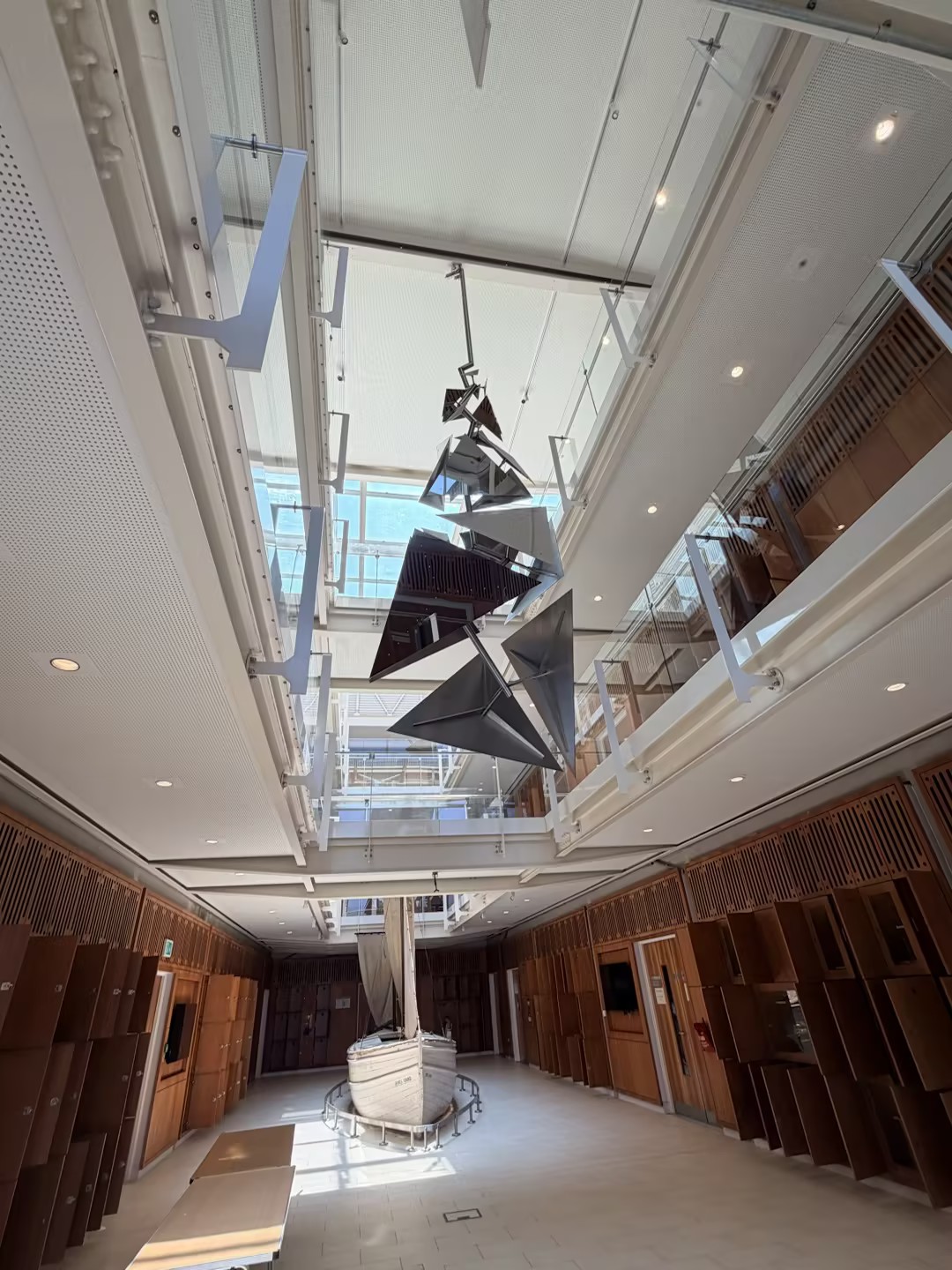
IV. A tiny lifeboat that brings grown British visitors to tears
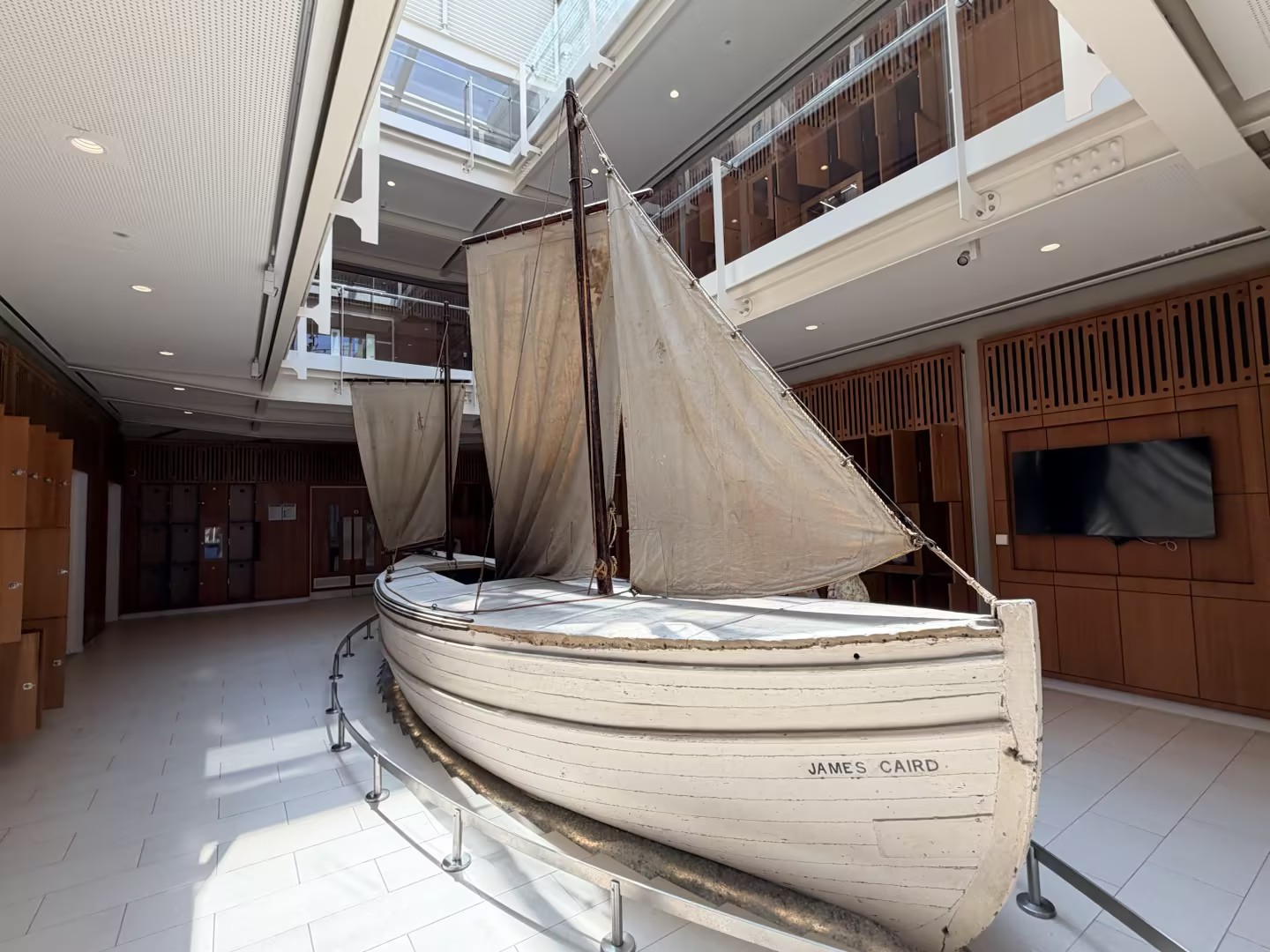
If you thought the previous exhibits were moving, the next two artefacts hit me with an overwhelming emotional jolt.Housed in the college’s modern science building sits a miniature lifeboat, belonging to Dulwich alumnus Sir Ernest Shackleton, the iconic Antarctic explorer.
Here is the story: in 1914, Shackleton led an Antarctic expedition aboard the Endurance. The ship became trapped and eventually crushed by pack ice, sinking into the Weddell Sea, leaving all twenty-eight crew stranded on frozen, isolated pack ice with no hope of rescue.
Shackleton selected five men and set sail aboard this 7-metre lifeboat, the James Caird, crossing the most treacherous stretch of ocean on Earth to seek aid over 1,300 kilometres away. Battling mountainous waves and relentless blizzards, they navigated solely with a sextant to reach land. Upon landing, Shackleton trekked across an uncharted, impassable glacial mountain range to finally secure help.
The miraculous outcome: all twenty-eight crew members survived the ordeal, without a single loss of life. This epic voyage remains legendary in maritime history. Peter shared that countless British visitors break down in tears standing before this small craft.
Standing beside the lifeboat, I finally understood why Dulwich displays it for its students: it is not merely a tale of exploration, but a masterclass in leadership — how a leader refuses to abandon a single person, even amid total despair.
V. A war memorial that unlocked my true understanding of “elite”
At the far end of campus stands a solemn war memorial.Over three thousand Dulwich alumni enlisted in World War One, and more than five hundred never returned home; a further three hundred alumni perished in World War Two. A Latin inscription is carved across its stone surface: MORTUI VIVUNT — The dead live on.
Peter explained that every November, the entire student body, including the youngest pupils, gather before the memorial for a silent vigil to pay tribute.
I wish to clarify a common misunderstanding: the memorial honours not schoolboys, but former Dulwich students who enlisted as adults after graduation. Many were barely eighteen, nineteen or twenty years old, young junior officers who charged over the trenches first and fell first.
Circle back to the library’s two allegorical paintings: Liberalitas (Generosity), and Pietas (Duty).The founder embodied Generosity by surrendering his wealth; the names etched into this stone monument embody the second virtue — Duty.
Those two ideals hung on the library wall four centuries ago, and generation after generation of Dulwich alumni have lived them out, some sacrificing their very lives.
Standing before the memorial, I finally grasped what true elite status means.These alumni could have relied on their family backgrounds and prestigious education to live secure, comfortable lives. Yet when their nation faced crisis, they chose to march into battle, even at the cost of their lives. All top British public schools share a core value: noblesse oblige — privilege bears responsibility. Those born into higher status and greater education bear the obligation to step forward and take risks in times of need.
True elite education does not merely cultivate top exam scorers, nor self-serving, status-obsessed opportunists. It shapes individuals with courage and conviction, ready to stand up for their country and fellow people when duty calls.Shackleton embodied this spirit, as do all the names resting on the war memorial.Through this lifeboat and this stone monument, the school passes this noble character down through every new cohort.
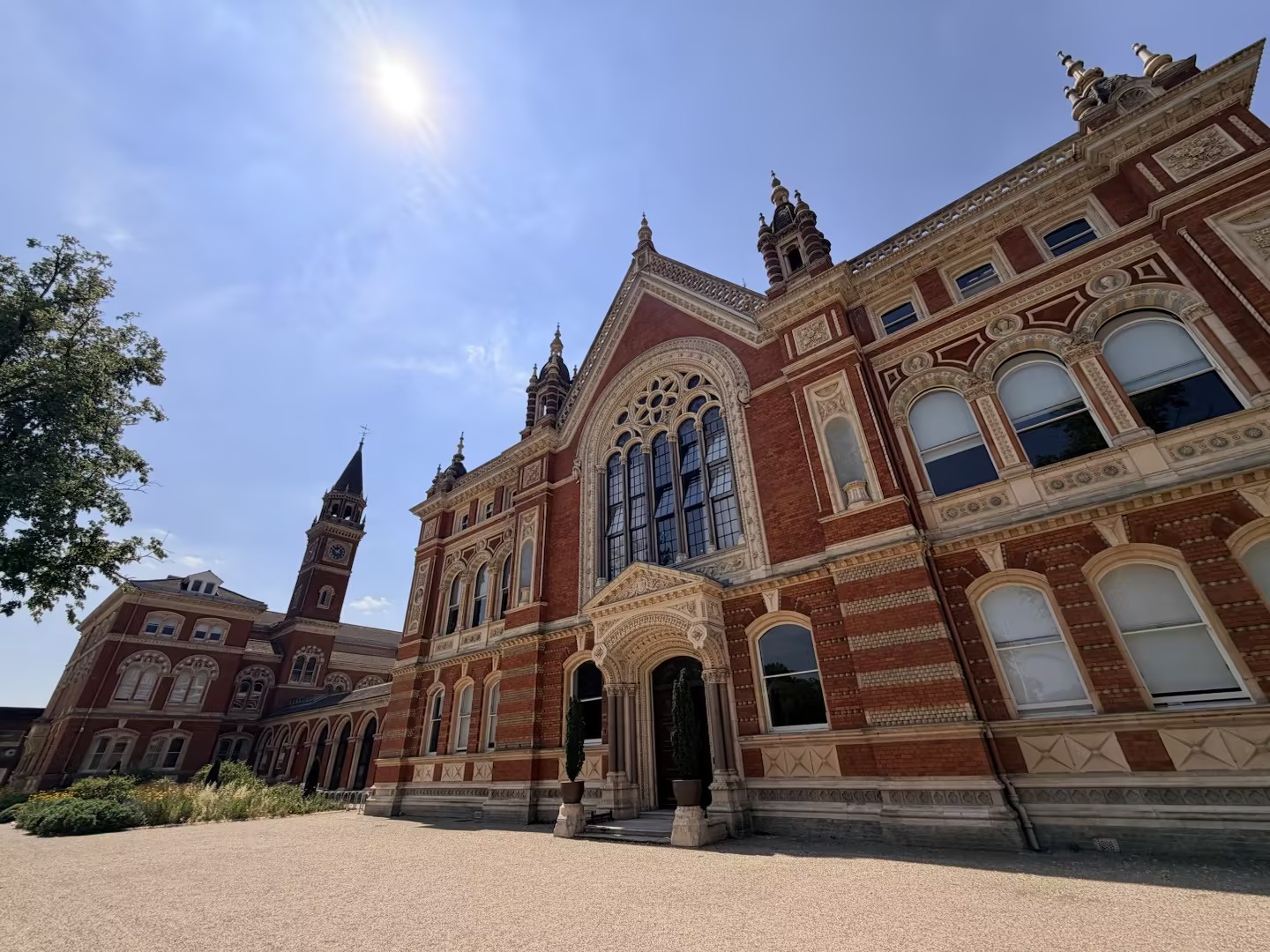
VI. Why Dulwich College London differs from its global overseas campuses
This brings us to the question families ask me most frequently during education planning:“Taylor, what separates Dulwich College London from its branches in Singapore, Thailand and China?”
Frankly speaking, overseas campuses match or even surpass the original in terms of physical facilities. Take Dulwich College Singapore for example: its campus architecture mirrors the London flagship almost exactly, it is consistently oversubscribed and holds an outstanding reputation. Campuses in China and Bangkok boast newer, more modern facilities than the mother school — Peter himself openly acknowledges this.
So what irreplaceable asset does the original London campus hold?That day, the answer became crystal clear to me. Curricula can be replicated, identical teachers recruited, and grander facilities constructed — yet one asset money cannot buy or copy is the tangible, living four-hundred-year heritage woven into every corner of the flagship campus.
It lives within that antique treasure chest, the James Caird lifeboat, and every name carved into the war memorial. Overseas Dulwich campuses inherit the college’s rigorous educational framework and standards, which is immensely valuable. But the immersive atmosphere of walking across lawns and beneath rooftops steeped in centuries of history can only be nurtured by time; it cannot be rushed or purchased.
This is by no means a criticism of overseas campuses — quite the opposite.For most families, enrolling children in Dulwich Bangkok or other Southeast Asian campuses during their junior years is the most practical, strategic choice: families gain a slower-paced, highly international learning environment with exceptional cost efficiency, while accessing the exact same educational philosophy and standards as the London flagship. Students can experience the flagship’s profound historical atmosphere later, during a campus tour or study trip.
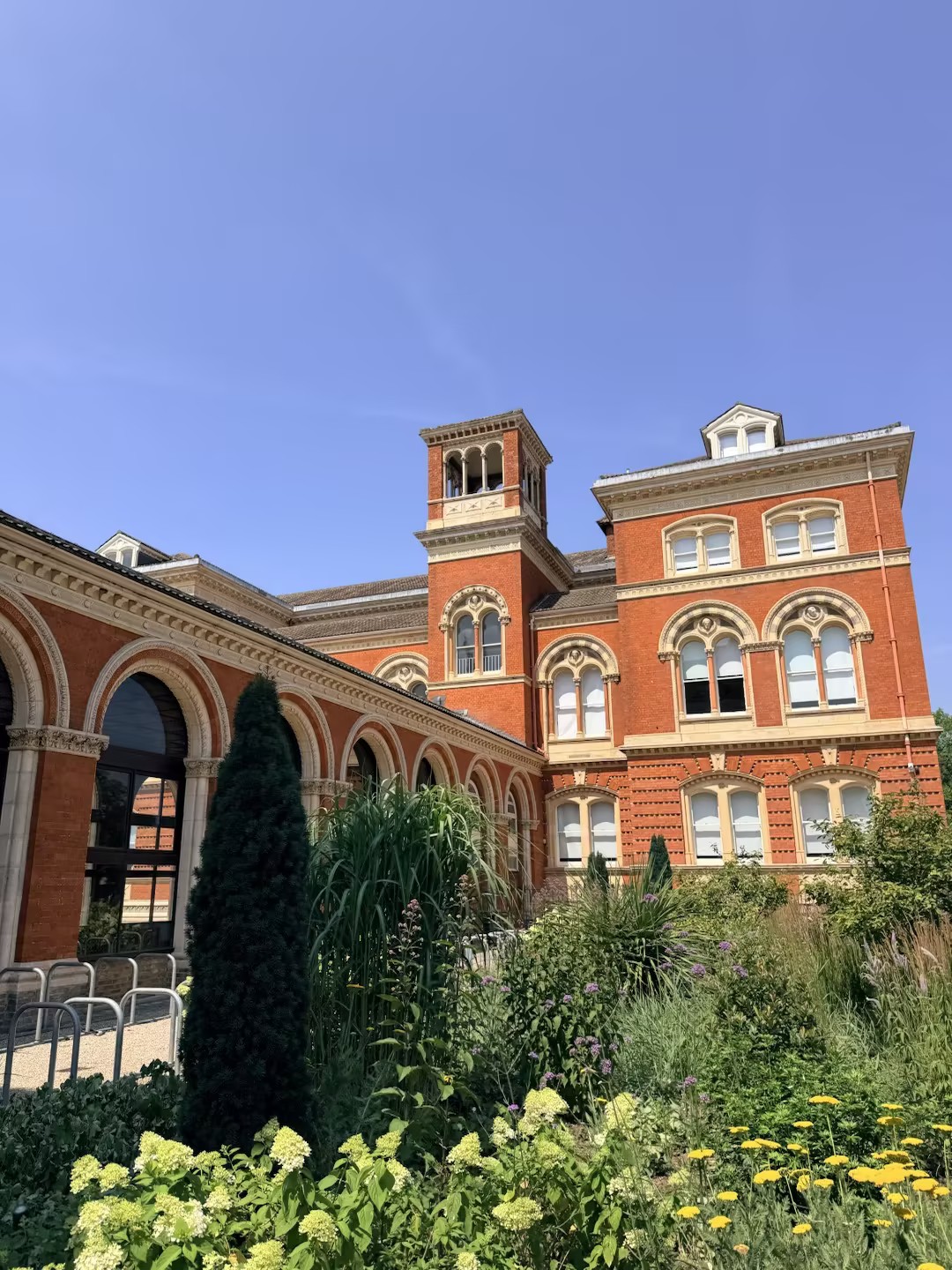
When I left Dulwich that afternoon under bright sunshine, I felt no trace of fatigue despite the long day.After years working in this industry, I have met countless anxious parents fixated solely on league tables, exam grades, Oxbridge and Ivy League admissions. These milestones are undeniably important, and I assist families with this planning daily.
Yet this Dulwich visit pulled me back to a fundamental question: what is our ultimate goal, after all the effort and travel to select the ideal school for our children?
Is it simply a flawless academic transcript? Yes, but it is far from everything.
I always tell parents: when choosing a school, look beyond rankings and facilities. Feel what core values the institution aims to instil in your child.A good school delivers excellent teachers and strong exam results. A world-leading school, however, embeds a lasting mindset in students day by day, through every ancient artefact, every historical story and every educator like Peter: an understanding of duty, generosity, solidarity amid despair, and the willingness to sacrifice for a greater good when duty calls.
I will share Peter’s honest advice for parents debating the optimal transfer age: if your target is entry into elite British schools and full immersion in their campus culture, Years 9 (ages 13–15) are the ideal window. Students joining at this age have ample time to fully engage with drama, music, sports and all extracurricular offerings — the very heart of British holistic education. Students transferring only at Sixth Form (age 16) are often forced to prioritise exam preparation alone, missing the most formative, enriching aspects of school life.
Of course, every child is unique and requires individual, professional assessment — and that is exactly where our advisory service steps in.